 Most time ashore
Islet and Perast, slowly
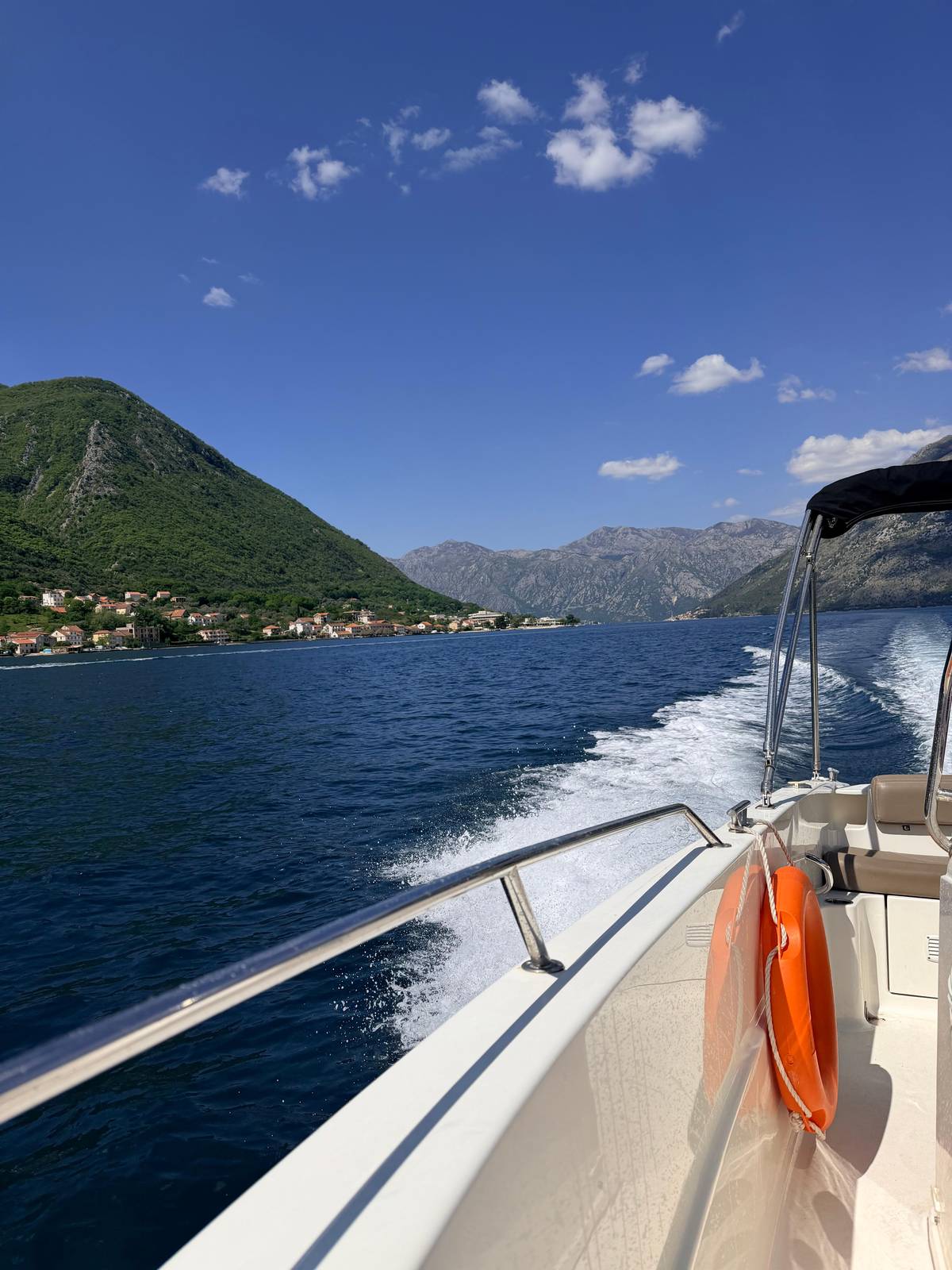
Speedboat from Kotor
- Length
- 3 hrs
- On the islet
- 30 min
- In Perast
- 1.5 hrs
- Price
- from $48
Guides
Language
EnglishCurrency
US dollar · $GetYourGuide shows prices in the currency you choose.
Guide · Perast
Off Perast a small church sits on an island that sailors made by hand. Here is how Our Lady of the Rocks grew out of the sea, what you see inside, and which boats stop there.
Editorial team, blue-cave-montenegro.comUpdated October 25, 2026about 7 min to read35 sources
In a nutshell
Our Lady of the Rocks is the rare island you can call man-made without exaggerating. Where it stands there was once only a bare reef, while its neighbour, the island of St George with its Benedictine abbey, is a natural rise of an undersea ridge.5 The fill was heaped around the original rock, and the main altar of the church rests on that rock today.6 When you step off the boat you are standing on centuries of deliberate work.
The tradition preserved in Perast takes 22 July 1452 as the islet's birthday.1 Over the centuries the people of Perast kept enlarging it by piling stones and sinking old, worn-out sailing ships, and by 1603 about a hundred ships had gone to the bottom around it.2 Each sunken hull gave a little more ground, and each gain allowed bolder building on top.
The custom never stopped. Every year on that date at dusk, the boats of Perast, loaded with stones and tied to one another, process along the shore singing old songs and then drop their stones around the islet.7 Locals know the procession as the Fašinada. If your trip falls on that evening, watching it from the waterfront of Perast tells you more about this place than any guidebook.
Five centuries
1452
1603
About a hundred old ships had been sunk to enlarge it.2
1624
North African pirates plunder the church and damage the icon.9
1667
Most of today's ensemble dates from after 1666.10
1720 to 1725
Built to designs by Ilija Katičić.11
1828
Jacinta Kunić signs her votive picture.12
The first church here, like today's dedicated to the Assumption of the Virgin, was built in the middle of the 15th century and was modest, as small as the rock under it.13 Most of what you see now dates from after 1666, because the great Dubrovnik earthquake of 1667 badly damaged the shrine.10 The presbytery followed between 1720 and 1725, to designs by the local builder Ilija Katičić.11
Everything about it speaks of the sea. Archival records show that from the 16th century to today more than 150 ships have carried the name of Our Lady of the Rocks.14 The museum keeps the teacher's chair of the Perast elementary school that the Franciscans opened in 1636, a school that also taught navigation.15
The icon at the heart of the shrine was painted around 1452 by the Kotor painter Lovro Marinov Dobričević, in tempera on a cedar board.8 In 1624 North African pirates plundered the church and left the icon riddled with damage.9 The main altar of white Carrara marble came later, commissioned by the town of Perast in 1796 from the Genoese workshop of Antonio Capellano.16
Three ways to visit
Most time ashoreSpeedboat from Kotor
 Shortest
Speedboat from Kotor
 Highest rated
By van from Kotor port
Decision helper
Match the visit to your day
A 20-minute islet stop and an optional 30-minute swim at the cave.
1.5 hours in Perast after the islet.
20 minutes on the islet and 30 in Perast.
A 45-minute cable car ride is part of it.
It happens at dusk every year on the islet's birthday.7
By this old and simple ceremony, on that day every year at dusk, all the boats of Perast, filled with stones and tied one to another, set off in a solemn procession along the shore, singing traditional folk songs, toward Our Lady's island, to pile the stones around it.
Look up as soon as your eyes adjust to the dim light. The ceiling is divided into 45 geometric fields, each framed in gilded rope-shaped borders.19 The painted cycle runs to sixty-eight paintings, which make the shrine a European rarity of late 17th-century church art.3 Most are the work of Tripo Kokolja, born in Perast in 1661 and dead on Korčula in 1713, one of the most important Baroque painters of this coast.20
His Dormition of the Virgin on the south wall measures 9.5 by 3 m, big enough to make a small church feel crowded with figures.21 Around the paintings hang the silver votive plates, about 2,000 of them, made mostly by goldsmiths from seventeen different Kotor workshops between the 17th and 19th centuries.4
A large silver relief shows Perast, both islets and the Ottoman army attacking the town; it was a joint offering for the victory over the Turks on 15 May 1654, made by the Venetian goldsmith Francesco Costadoni between 1736 and 1738.22 Perast still marks 15 May every year as its votive day.23 Give these objects a few minutes. A 20-minute stop goes fast, and the silver is easy to walk past on your way to the view.
Checklist
Cost calculator
Starting totals for boats that stop at the islet.
Total from$95
each from $48
Check availabilityfree cancellationA total here is the lowest per-person starting price on GetYourGuide times the size of your group, converted with the European Central Bank's daily reference rate; the date and option you pick set the final amount.
Video
The YouTube player stays off until you press play.
The most personal object in the museum is an embroidered votive picture of the icon by Jacinta Kunić of Perast. Tradition says she worked on it for a full 20 years, with silk, silver and gold thread, and used natural hair for the hairstyles of the figures.24 Her signature shows she finished it in 1828.12
Sources do not agree on the dates. The national tourism organisation says she worked on it from 1803 to 1828 and wove in strands of her own hair.25 Either way it is one woman's patience made visible, and it is worth asking the guide or the custodian to point it out, because it is small and easy to miss among the paintings.
Everything here was paid for by a seafaring town at the height of its wealth. Perast had its golden era under the Republic of Venice, from 1420 to 1797, and over the centuries it built 20 Baroque palaces, 17 Catholic churches and two Orthodox ones.2627 The islet is the town's public diary, written in stone, paint and silver.
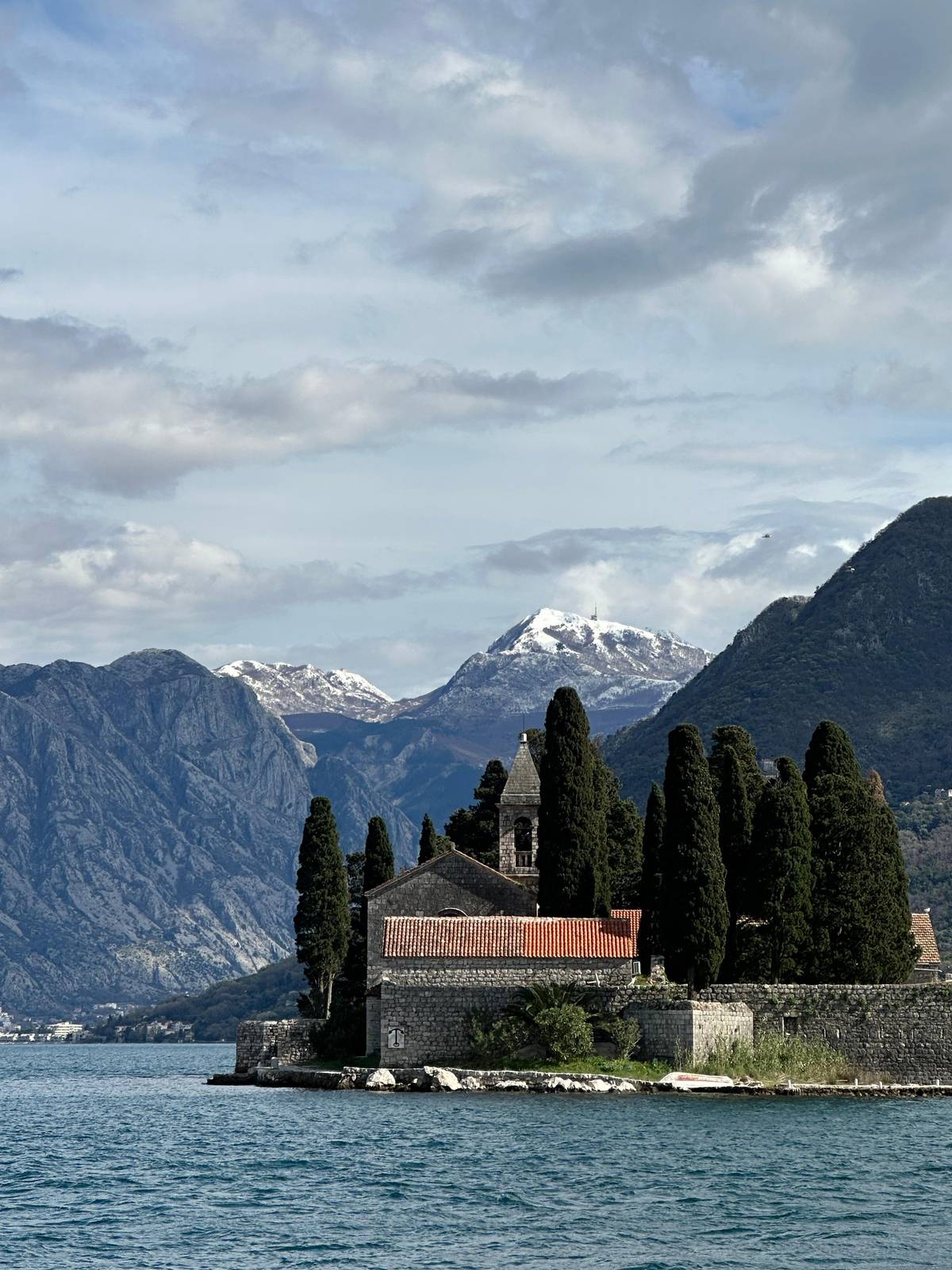
The island next door looks like a painting in itself: a dark ring of cypresses around a church and a few walls. It holds the 12th-century Benedictine monastery of Saint George and the old graveyard of the noble families of Perast.28 Unlike its neighbour it was not built; it is the top of a natural ridge under the water.5
None of the tours compared on this site lands on St George, so enjoy it from the water and from the quay of Our Lady of the Rocks, where it lines up against the mountains of the inner bay. The islets together are part of what UNESCO protects here: the World Heritage site includes Kotor and its fortifications, Risan, Perast, St George and Our Lady of the Rocks.29
The whole region was inscribed in 1979, by an emergency procedure after a devastating earthquake that year.30 The shrine itself cracked again at its old weak point in that earthquake.10 When you see how close to the water everything here stands, it is easy to understand why a single earthquake changed how the world looked after this bay.
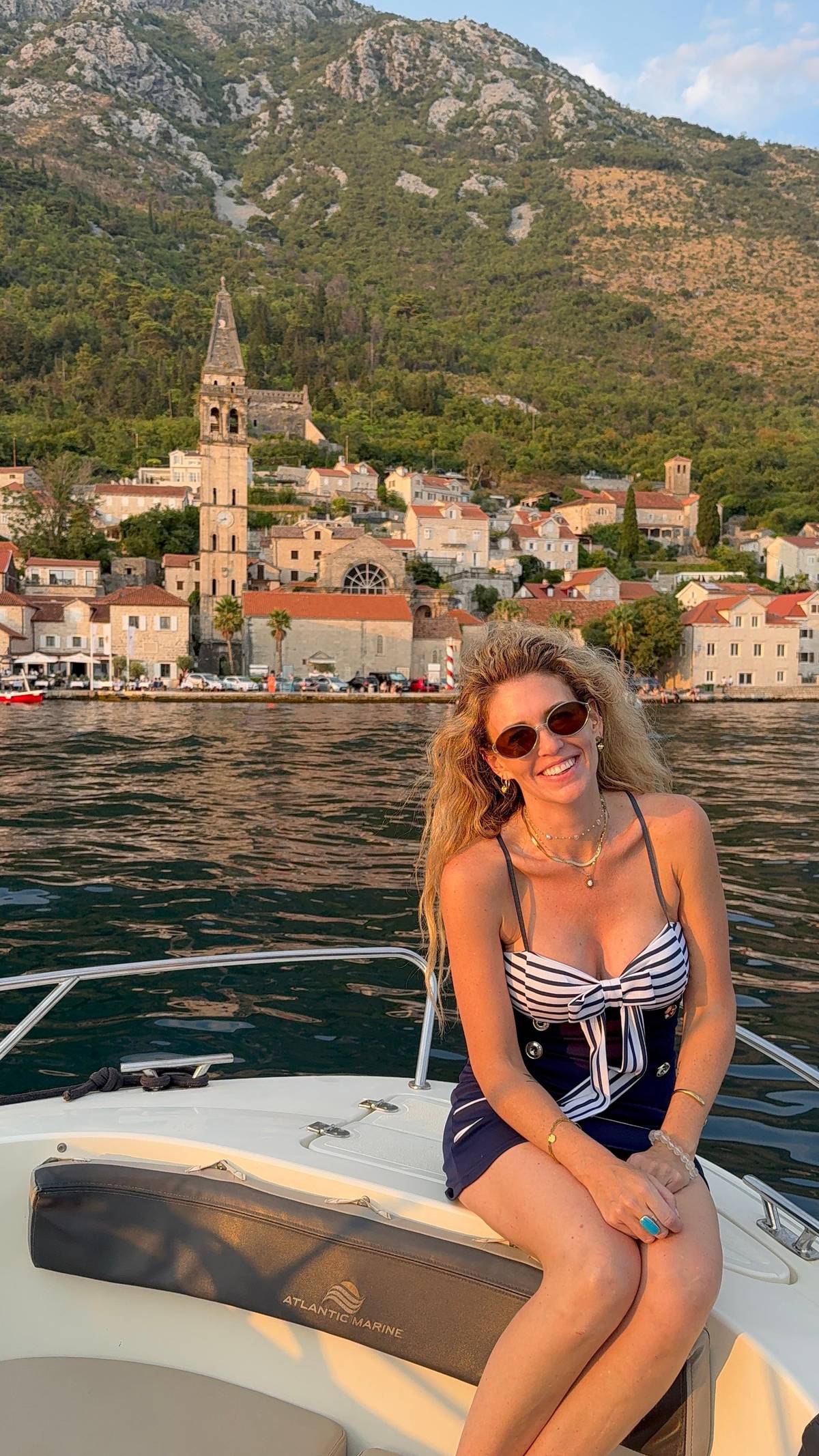
Perast had no defensive walls. Its only fortification above the town is Holy Cross Fort, built in 1570, and the town defended itself from towers raised beside almost every noble palace.31 Walk the waterfront and you notice those towers rising from the facades, a reminder that every family here guarded its own door.
This was a town that taught navigation. In 1698 Captain Marko Martinović founded the first maritime school in the Balkans here and trained Russian boyars in navigation.32 More than 2,000 people lived in Perast until the end of the 18th century, only about 400 remained by the start of the 20th, and the 2023 census counted 237.1718
The Perast Museum fills the Bujović Palace, built in the 17th century.33 It opens Tuesday to Sunday, from 8:00 to 20:00 between 15 April and 15 October and from 10:00 to 16:00 in the colder half of the year.34 Smekja Palace, built in 1764 for a family of sea captains, admirals and merchants, also faces the water.35 The booked speedboat only passes Perast, so choose a tour with a land stop if you want to walk here.
The church and museum keep seasonal hours. One listing gives them as typically until 17:00 in April, May, September and October, until 18:00 in June and until 19:00 in July and August, and notes that you can still walk the islet when they are closed. Hours can change, so an afternoon tour late in the season may find the doors already shut.
Dress for a church, not for the beach. Entry to the islet is not allowed in swimwear, and the booked tour asks for covered shoulders and modest shorts, skirt or dress; another listing confirms that swimwear is not permitted inside the church. On a tour that ends with a swim, keep a T-shirt and shorts on top of your swimsuit until the cave.
The relaxed way to visit is a 3-hour tour that stops 30 minutes on the islet and then gives you 1.5 hours in Perast. A shorter 2-hour version stops 20 minutes on the islet and 30 minutes in Perast. If you want the islet plus the cave, the booked speedboat stops for 20 minutes; one cheap Perast tour, by contrast, sees the islet only from the boat, so read the listing before you book.
Into the blue
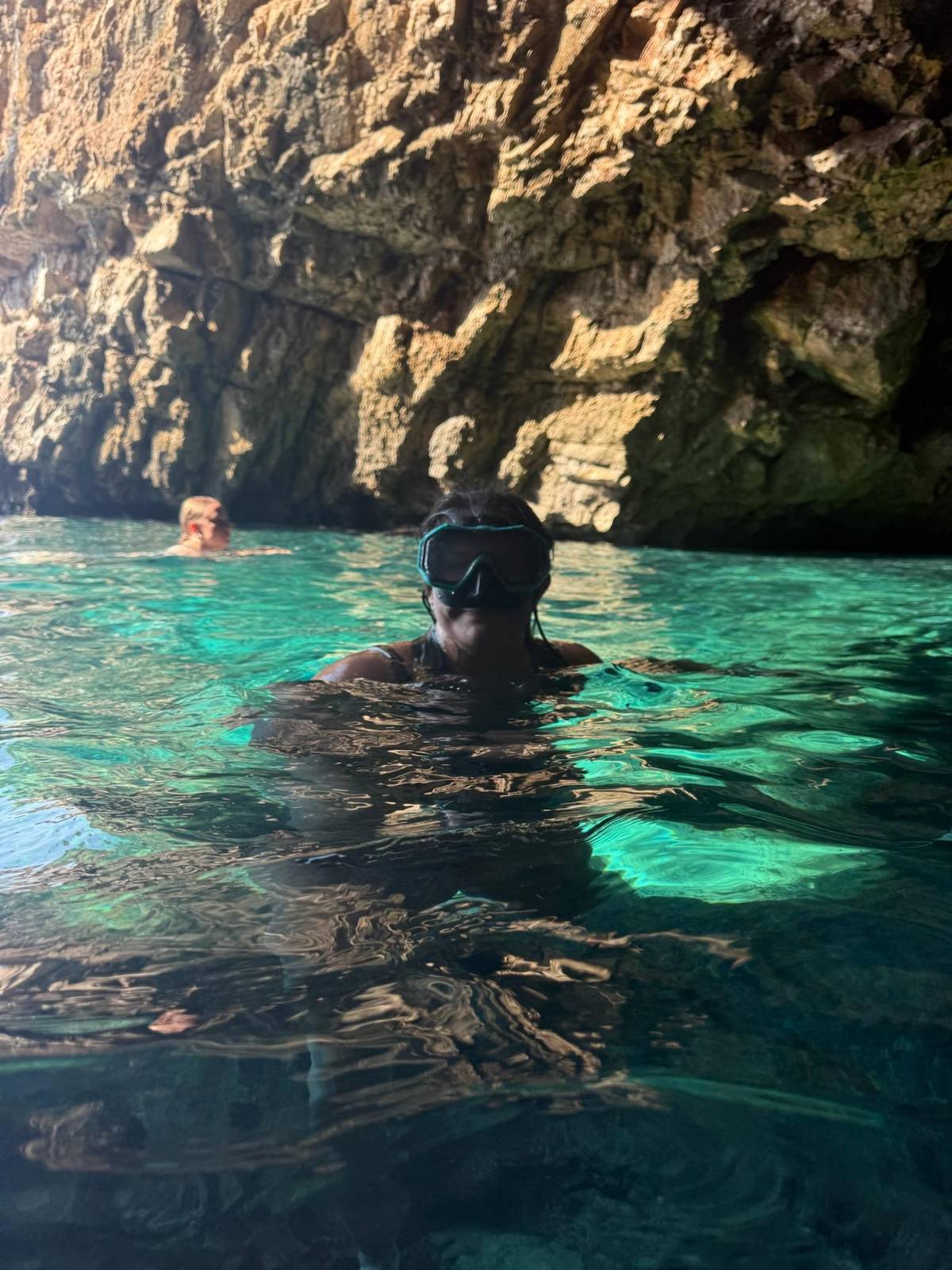
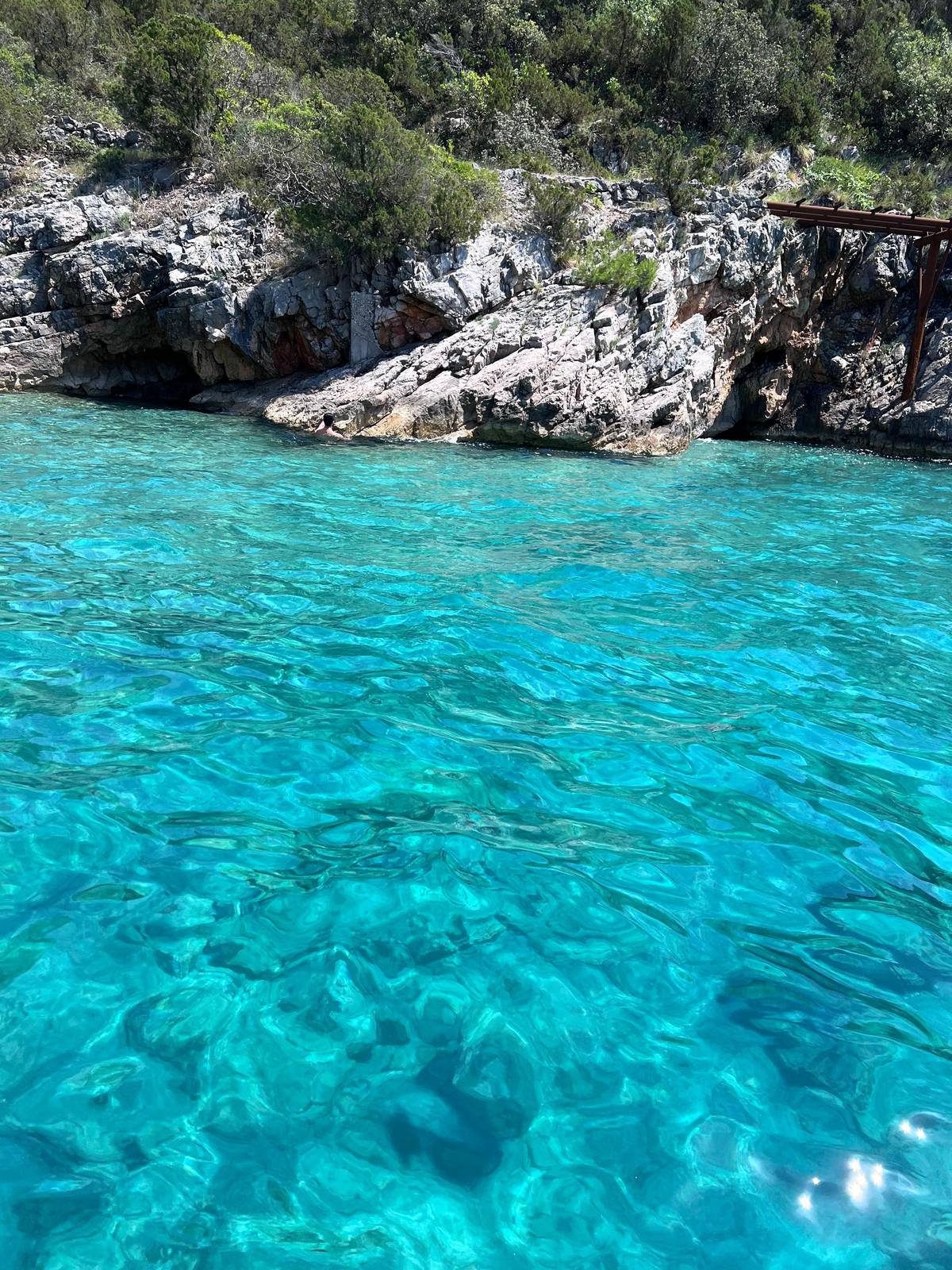
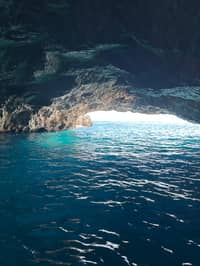
3 hours by speedboat from Kotor, with an optional 30-minute swim at the cave.
Yes. It grew around a bare reef from piled stones and sunken ships; about a hundred ships were sunk by 1603.52
Tradition says 1452. Its birthday is kept on 22 July 1452; most of the church dates from after 1666.110
The yearly stone procession. At dusk on the islet's birthday, Perast boats tied together carry stones out and drop them around it.7
Not on the tours. It holds a 12th-century Benedictine monastery and the nobles' graveyard; see it from the water.28
Seasonal, roughly to 17:00 to 19:00. One listing gives 17:00 in spring and autumn, 18:00 in June and 19:00 in July and August.
No. Swimwear is not allowed on the islet church visit; bring something to cover your shoulders.
By boat. A 3-hour tour stops 30 minutes on the islet and 1.5 hours in Perast.
Mostly Tripo Kokolja. The Perast-born Baroque painter lived from 1661 to 1713.20
Sources
Keep reading